Theodore “Ted” Besmann, Center Director
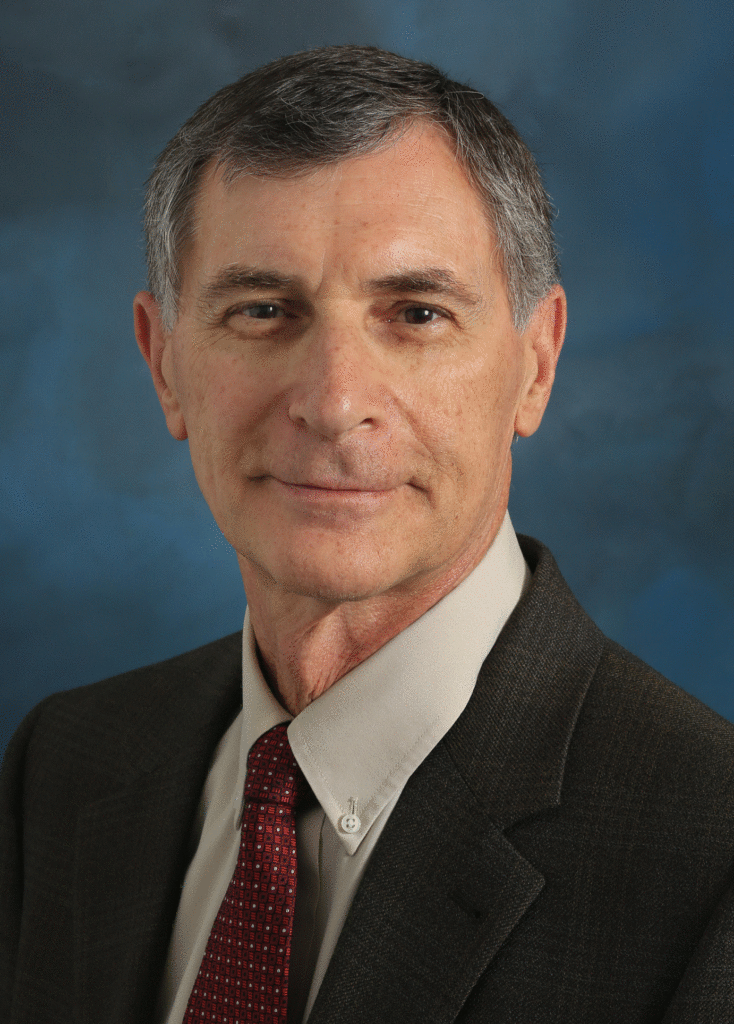
Dr. Besmann (CV) is Professor and General Atomics SmartState Chair for Transformational Nuclear Technologies at the University of South Carolina and has a Joint Faculty Appointment with Oak Ridge National Laboratory. Previous to USC, Prof. Besmann led a research group at ORNL, most recently in the Materials Science and Technology Division. Current research focuses on the development of novel accident tolerant and molten salt nuclear fuels; experimental measurement and computational modeling of the thermochemical behavior of nuclear and other materials. He is responsible for the development of the Department of Energy Molten Salt Thermal Properties Database-Thermochemical for molten salt reactor systems, generating a public database for fluoride and chloride systems. Prof. Besmann is also Deputy Director of a DOE Energy Frontier Research Center led by USC, the Center for Hierarchical Waste Form Materials. He is a Fellow of both the American Ceramic Society and the American Nuclear Society.
Assistant Professor

Juliano Schorne-Pinto earned a Ph.D. in Materials Science and Engineering from the Institut National Polytechnique de Toulouse for his research at the CIRIMAT and Laboratoire de Génie Chimique (LGC). His undergraduate and master’s studies were completed at the Université de Montpellier and Universidade Federal do Rio Grande do Sul (UFRGS) in a dual-degree path in MSE and Physical chemistry of materials, respectively. His research focus includes thermodynamic modeling of materials, crystallography, and thermo-structural and thermodynamic characterization of materials.
Staff Scientists

Jorge Paz Soldan Palma earned his PhD in Materials Science and Engineering from the Pennsylvania State University in 2022, where his research was based on the studying the thermodynamic stability of the Yb14MnSb11 thermoelectric compound when exposed to extreme conditions. Dr. Palma’s current research is focused on the thermodynamic modeling of molten salt systems and broader aspects of modeling and computing these properties.

Ronald Booth earned his Ph.D. and M.S. in Mechanical Engineering at North Carolina State University in 2021. He also holds a B.S.E. in Engineering Physics from Murray State University. At NC State, his research work was focused on flexible semitransparent electrode fabrication and implementation for wearable electronic and organic photovoltaic devices. Ronald’s current work is addressing the thermodynamic modelling of tri-carbide fuel mixtures for nuclear thermal propulsion applications.

Aiswarya Padinhare Manissery holds a PhD in chemistry from the Homi Bhabha National Institute, Mumbai, India. During her PhD, worked determining ternary phase diagrams relevant for understanding the interaction of structural steel materials with lead-bismuth liquid metal reactor coolant. While working as a postdoctoral research associate at the Bhabha Atomic Research Center, India, she was involved in the determination of the thermochemical properties of different ternary oxides using calorimetric and emf methods. As a postdoctoral researcher in the General Atomics Center, her research interests are on the structural characterization and thermodynamic modeling of nuclear materials with an emphasis on molten salt reactor-related systems.
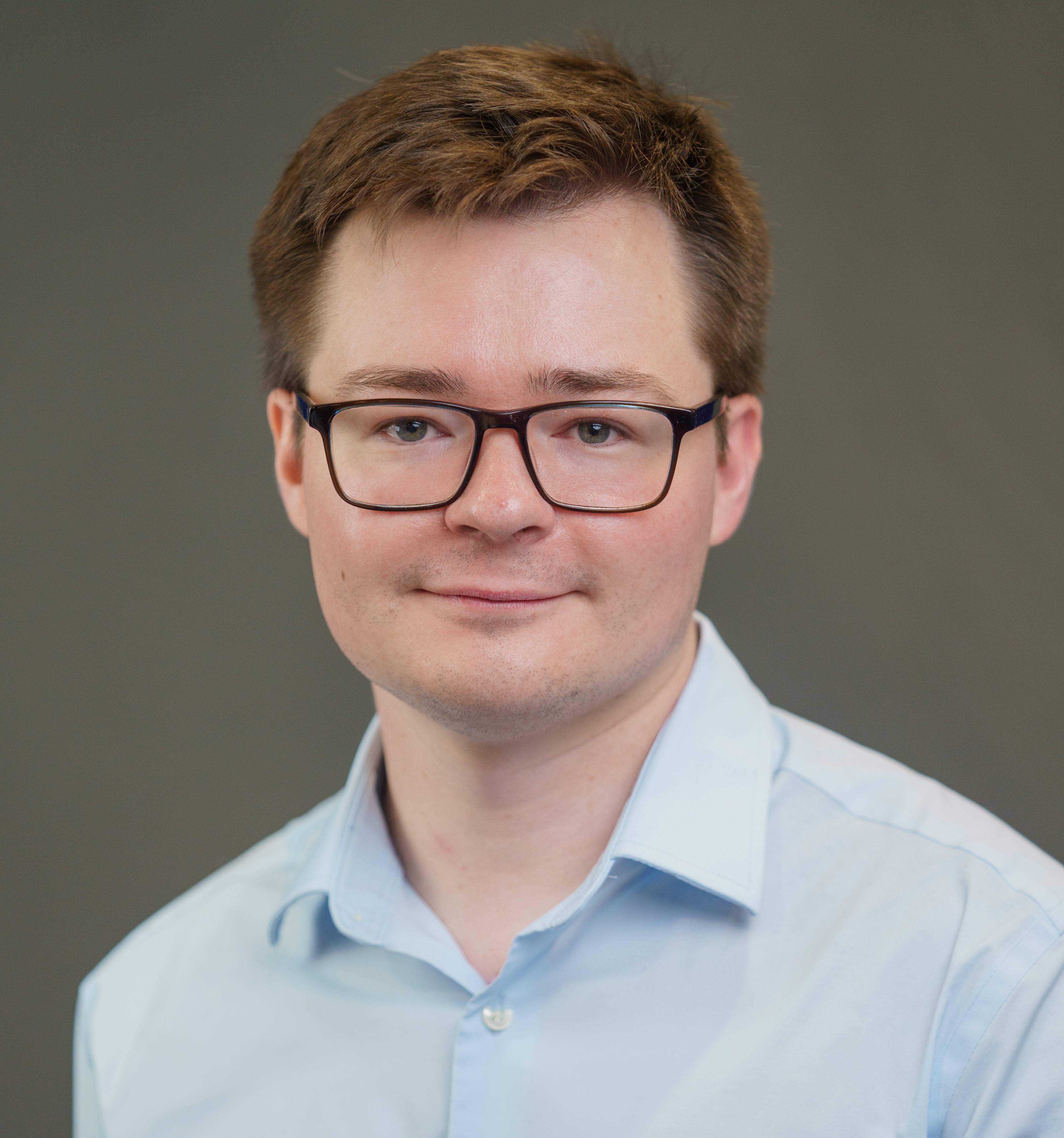
Jack Wilson earned his PhD in Nuclear Science and Engineering from Bangor University, UK, with funding from the National Nuclear Laboratory, UK, and Nuclear Energy Futures Centre for Doctoral Training. His research focused on developing complex and high-entropy alloys for light water fission reactors, combining atomic-scale simulation and targeted experiments. His research in the group focuses on developing thermochemical databases for Generation IV molten salt reactors and modeling the behavior of nitride and carbide nuclear fuels.
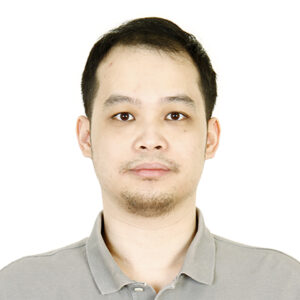
Pandu Wisesa earned his Ph.D and M.S in Materials Science and Engineering from the Johns Hopkins University. He also holds a B.S. degree in Materials Science and Engineering from University of Illinois. His graduate work focused on accelerating first-principles calculations by the application of informatics. He was previously a postdoc at the University of Pittsburgh working on the development and application of machine learning interatomic potentials for metals and oxides. His current research focus is on the application of first-principles calculations and other related models in understanding the thermodynamics and kinetics of salts at high temperatures.
Students
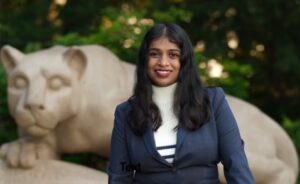
Krupa is a PhD student in the Mechanical Engineering program. She earned her B.S. in Materials Science and Engineering from Penn State University, where she conducted research in the Phases Research Lab under Dr. Zi-Kui Liu on third-generation CALPHAD descriptions of pure elements. In parallel with research, she developed a passion for teaching as a teaching assistant for the course Microstructure Design of Structural Materials. The intersection of computational research and engineering education motivated her pursuit of a PhD. Her undergraduate experience cultivated strong interests in computational materials science, high-throughput materials discovery, and Bayesian statistics. She is particularly interested in applying these approaches to molten salt systems at the General Atomics Center.

Zachary Gardiner is currently an undergraduate student in the Honors College class of 2027 at the University of South Carolina pursuing a bachelor’s degree in chemical engineering. He plans on obtaining an accelerated master’s degree in nuclear engineering. Zachary is highly interested in Generation IV nuclear reactors, especially molten salt reactors, and is very excited to be working with the General Atomics Center. Zachary is also a member of the American Nuclear Society.
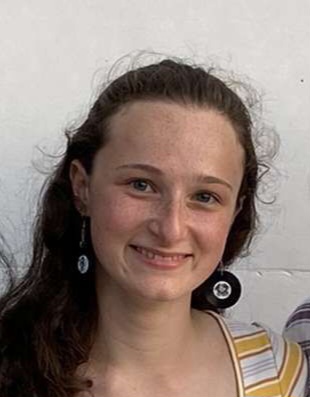
Annabelle Husek is an undergraduate student at the University of South Carolina class of 2027. She is pursuing a bachelor’s degree in chemical engineering with a minor in mathematics. She is interested in a career in chemical engineering with a focus on nuclear reactors, specifically molten salt reactors. Annabelle is hoping to be able to help with innovations in the safety and operation of nuclear reactors to help make them more environmentally safe for increased use. She is excited to be working in the General Atomics Center to learn more about molten salt reactors.
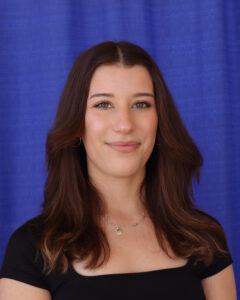
Lianna Eaton is an undergraduate student at the University of South Carolina, class of 2028. She is pursuing a bachelor’s degree in chemical engineering with a minor in business administration. Lianna is a member of the American Institute of Chemical Engineers (AIChE) and the University of South Carolina’s Alpha Lambda Delta chapter (ALD). She is interested in a career in nuclear engineering, focusing on nuclear reactors and molten salt reactors. Lianna aims to contribute to research and innovations in the operation of nuclear reactors to enhance their environmental sustainability. She is eager to learn more about molten salt reactors through her work at the General Atomics Center.
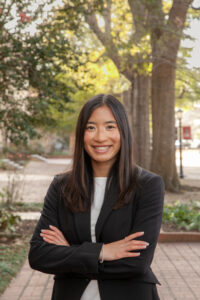
Emma Baker is an undergraduate student at the University of South Carolina class of 2028. She is pursuing a bachelor’s degree in aerospace engineering. She is interested in a career in aerospace engineering with a focus on propulsion systems, specifically nuclear thermal propulsion. Emma is hoping to be able to contribute to the improved safety of nuclear power systems, particularly aimed toward space applications. She is excited to be working in the General Atomics Center to gain a better understanding of nuclear reactor systems and fuel sources.